How To Save Money With bodHOST VPS Hosting
The successful growth rate of the business depends on the online market. So, after starting…

 Paul Lopez
Have you ever wondered why big brands suddenly switch their website domain? Domain migration isn’t just a technical move; it’s a bold step in a business’s growth journey. Maybe the brand is evolving, aiming for higher SEO rankings, merging with a new company, or upgrading to faster and more secure technology. But here’s the thrilling part. One single mistake during migration can cost a website its traffic, Google ranking, and even its reputation.
Therefore, migrating to a new domain can be a stressful and hectic task, particularly when you have built strong rankings, backlinks, and trust over time. But the good news is that with the right Domain Migration SEO strategy, you can move to a new domain without losing SEO performance, traffic, or conversions.
This guide will help you understand how to change your domain safely, maintain rankings, and keep Google happy throughout the transition. Whether you are rebranding, upgrading your TLD, or consolidating websites, this domain migration guide will help you stay ahead of SEO risks.
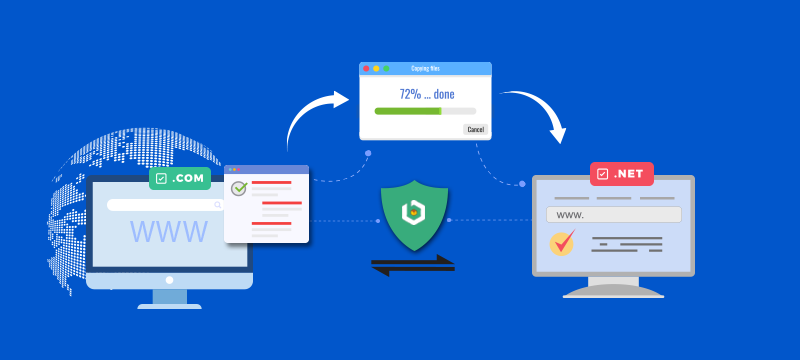
The process of migrating a website from one domain to another, which needs moving all of its resources and content, is known as domain migration. The main objective is to achieve this while maintaining search engine rankings, link equity, and user experience. This calls for careful preparation, including the use of 301 redirects, internal link updates, and search engine notifications.
Let’s take an example: oldsite.com > newsite.com
• Rebranding their identity
• Switching to a more relevant or premium TLD
• Expanding into new markets
• Fixing penalties or domain reputation issues
• Merging or restructuring content
While domain name changes can improve visibility and branding, they can also impact search performance if handled incorrectly. Google sees domain migrations as major SEO events; URLs change, indexing resets, and backlinks need redirection.
That’s why a strong SEO checklist for domain migration is essential. It ensures content, technical SEO, and authority transfer smoothly from the old domain to the new one. The goal is to preserve traffic, maintain rankings, and create a seamless user experience.
A successful domain migration starts with a solid plan that protects your visibility and authority. Google treats a domain switch like a completely new website, so every small step matters. The goal is simple: transfer your SEO value, backlinks, content structure, and ranking signal from your old domain to a new one without trouble. Follow this checklist to keep your traffic stable and ensure Google understands the move clearly. With the right redirects, verification, and monitoring, you can ensure a smooth transition and maintain your search presence while embracing your new domain identity.
To change domains safely, you must follow a structured SEO migration process. Here are the steps:
Once the site goes live on the new domain, you must monitor SEO performance closely.
Active Directory domain migration focuses on user accounts, policies, and authentication rather than website SEO. When organizations merge or rebrand, they may shift AD systems to a new forest or domain to strengthen security and management. While not directly linked to web SEO, AD migration is critical for internal network operations, guaranteeing user access, permissions, and applications continue functioning without downtime. IT teams often use tools like ADMT to move users and groups safely, avoiding identity conflicts and login failures across environments.
If you are planning a domain name transfer, bodHOST provides expert hosting support to manage the move with zero downtime. Their team helps configure DNS, SSL certificates, redirects, backups, and post-migration performance monitoring. With reliable infrastructure and 24/7 support, your website stays accessible while maintaining SEO integrity. Whether upgrading domains or expanding your brand, bodHOST confirms a secure, smooth migration experience tailored to SEO best practices.
Yes, but only with proper 301 redirects. These redirects tell Google that the old pages have permanently moved and that link equity should be transferred to the new domain. However, the transfer may take several weeks to stabilize. Google will reassess trust signals such as content quality, backlink profile, and domain age. If everything matches and the new domain remains reputable, the domain authority transfer becomes successful without long-term ranking drops.
Many businesses lose rankings due to avoidable errors during migration. Common mistakes include:
Avoiding these mistakes ensures that your new domain maintains authority and user experience remains intact.
Domain migration may feel risky, but it does not have to impact your rankings. Whether you are performing a Domain Name Transfer, switching hosting, or running a Domain Name Search for better branding, strategic planning is the key to SEO stability. By securing full backups, applying proper 301 redirects, updating internal/external links, and using tools like Google Search Console’s Change of Address, you can retain visibility while improving brand identity.
Partnering with a reliable hosting provider like bodHOST can further ensure smooth migration, better performance, and uninterrupted service during the transition.
With the right approach and continuous monitoring, you can successfully move to your new domain while safeguarding and even boosting long-term SEO success.
Learn more in our detailed article: How to Migrate a WordPress Site to Another Hosting Provider

Explore more hosting insights, tips and industry updates.
The successful growth rate of the business depends on the online market. So, after starting…
What sets dedicated servers apart from enterprise-level hosting? Dedicated servers give complete access to physical…
Easy, simple, and professional, DotNetNuke 7.0 is getting stronger. Those who do not know…