Know More About Domain Name (Part-II)
Register a domain name with domain registrar : You have to register your selected domain…

 Paul Lopez
Choosing the right hosting solution is an important step for any growing business. Your website’s performance, security, and ability to handle traffic all depend on the type of server you use. Many businesses start with basic hosting and later face confusion when deciding between a Virtual Private Server (VPS) and a Dedicated Server.
Both options offer better performance than shared hosting, but they serve different needs. Understanding how each works and where they fit can help you make the right decision for your business growth.
This guide explains the differences between VPS and Dedicated Servers, along with practical insights to help you choose the most suitable option.
A physical server can be divided into several virtual environments to create a Virtual Private Server (VPS). Each VPS operates independently with its own allocated resources, even though it shares the same physical hardware with other users. This setup provides more control and stability compared to shared hosting. Businesses can configure their VPS environment based on their requirements, making it a flexible option for growing websites. VPS hosting is often preferred by businesses that need better performance without moving to a fully dedicated server.
VPS hosting provides dedicated resources within a shared environment, ensuring more consistent performance than basic hosting plans. It gives users more control over apps and websites by enabling them to access and modify server settings. It is also a cost-effective solution, making it suitable for businesses that want improved performance without a high investment. Additionally, VPS hosting supports scalability, allowing businesses to upgrade resources as their needs grow.
A dedicated server is a physical machine that belongs entirely to one user or business, so you don’t have to share resources with anyone else. Unlike VPS hosting, there is no resource sharing, ensuring maximum performance and reliability. A dedicated server gives your business total control over every part of the server environment. This includes hardware configurations, operating systems, and security settings. It is ideal for organizations that require high performance and complete control over their hosting environment.
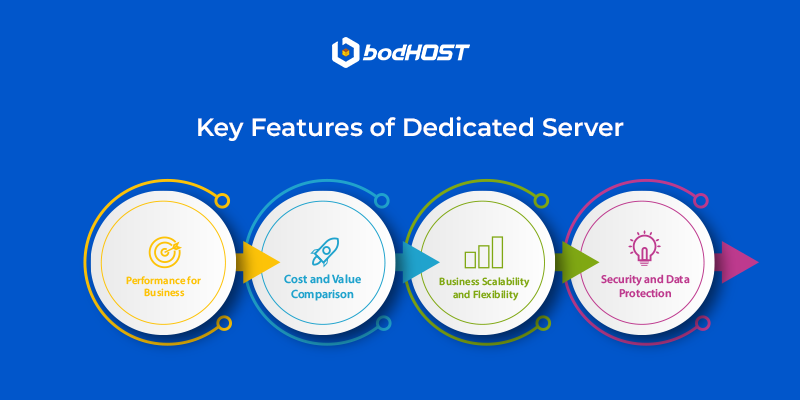
The managed dedicated servers provide high processing power and consistent performance since all resources are exclusively available to one user. This makes them suitable for handling large volumes of traffic and complex applications. They also offer advanced security, as there is no risk of other users affecting the server environment. Full customization is another advantage, allowing businesses to configure the server according to specific requirements.
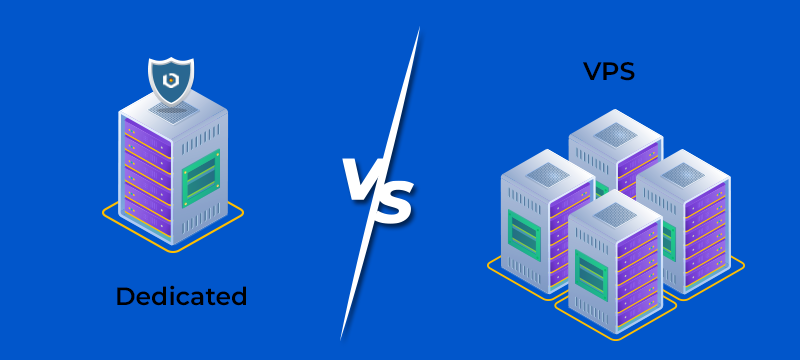
Both VPS and Dedicated Servers offer improved hosting capabilities, but they differ in terms of performance, cost, and resource allocation.
| Feature | VPS Hosting | Dedicated Server |
| Resource Allocation | Shared physical server with virtual separation | Fully dedicated physical server |
| Performance | Stable and scalable | High and consistent |
| Cost | More affordable | Higher investment |
| Control | Good level of control | Complete control |
| Security | Strong, but shared hardware | Advanced and isolated |
Understanding these differences helps businesses choose a solution that aligns with their growth plans.
Performance plays a key role in user experience and business operations. VPS hosting provides reliable performance for most websites and applications. It can handle moderate traffic levels efficiently and supports resource upgrades when needed. Dedicated servers, on the other hand, deliver consistent, high-performance. Since there is no resource sharing, businesses can run resource-intensive applications without performance fluctuations. For businesses with high traffic or complex workloads, dedicated servers offer a more stable environment.
Cost is often a deciding factor when choosing a hosting solution. VPS hosting is more affordable and provides a good balance between performance and cost. It is suitable for startups and growing businesses that need reliable hosting without significant investment. Dedicated servers require a higher upfront cost but offer better performance and control. For businesses that rely heavily on their website or applications, this investment can provide long-term value through improved reliability and efficiency.
Scalability is essential for businesses expecting growth. VPS hosting allows easy resource upgrades, making it a flexible solution for handling increasing traffic and workloads. Dedicated servers offer stability but may require hardware upgrades or migration when scaling. While they provide powerful performance, scaling can be less flexible compared to VPS environments. Businesses should consider their growth rate when choosing between these options.
Security is a critical factor for any business handling sensitive data. VPS hosting provides strong security features, including isolated environments and configurable settings. However, since the physical server is shared, there may be some limitations. Dedicated servers offer a higher level of security because they are completely isolated. Businesses have full control over security configurations, making them suitable for applications that require strict data protection.
The decision between VPS and Dedicated Server depends on your business requirements, budget, and future plans. VPS hosting is a practical choice for businesses that are growing steadily and need a balance between performance and cost. It works well for websites with moderate traffic and applications that do not require heavy resources. Dedicated servers are better suited for businesses that demand high performance, advanced security, and full control. They are ideal for high-traffic websites, large databases, and resource-intensive applications.
When a business grows, its hosting needs usually grow right along with it. Slow website performance during peak traffic periods is often an early sign that a VPS may no longer be sufficient. Increasing traffic, higher resource usage, and the need for enhanced security are also indicators that it may be time to upgrade. Businesses that rely heavily on their online presence often benefit from moving to a dedicated server for better performance and reliability.
Both VPS hosting and Dedicated Servers offer strong solutions for growing businesses, but they serve different purposes. VPS hosting provides flexibility, affordability, and scalability, making it suitable for businesses in the growth phase. Dedicated servers deliver maximum performance, security, and control, making them ideal for high-demand environments. The right choice depends on your business size, traffic levels, and long-term goals. By understanding your requirements and planning for future growth, you can select the bodHOST hosting solution that supports your business effectively.
Learn more in our detailed article: Why Dedicated Servers are the Best Choice for Enterprise Applications

Explore more hosting insights, tips and industry updates.
Register a domain name with domain registrar : You have to register your selected domain…
If you want to update your kernel with rpm then you have to follow the…
One of the biggest threats that websites face is Distributed Denial of Service. They are…