Cloud Computing Infrastructure and Operations Management
Hosting your cheap cloud hosting platform on virtualization delivers better business stability and reduces operating…

 Paul Lopez
Is your SaaS platform backed by the right Web Hosting for SaaS Platforms infrastructure? The hosting you choose directly impacts performance, security, scalability, and availability, ensuring your application stays fast, secure, and accessible as demand increases.
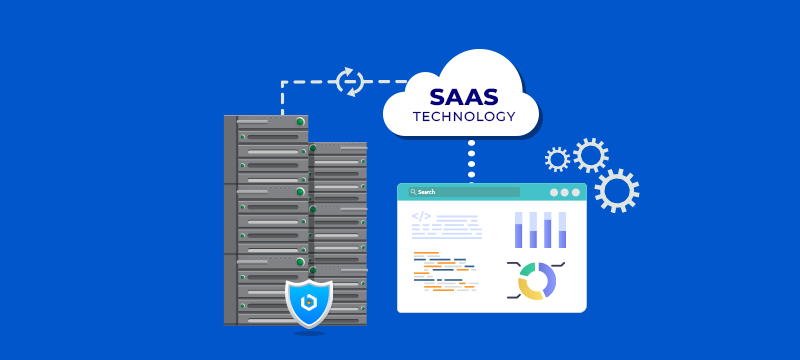
Web hosting for SaaS platforms refers to scalable, secure, and high-availability hosting infrastructure designed to run Software-as-a-Service applications. It supports multi-tenant environments, handles traffic spikes, ensures data protection, and enables seamless growth from startup to enterprise scale.
A specific hosting environment designed to enable cloud-based applications provided over the internet is known as web hosting for SaaS platforms. SaaS apps, in contrast to traditional websites, need to be highly responsive, have the capacity to scale resources dynamically, and be continuously available.
Web hosting for SaaS platforms refers to hosting environments specifically designed to run Software-as-a-Service applications, where users access the software online without installing it locally. Unlike traditional web hosting, which mainly serves static websites or basic web apps, SaaS hosting solutions are built to support multi-user access, scalability, high availability, data security, and continuous updates.
In simple terms, SaaS hosting works by running the application on powerful cloud or server infrastructure, managing databases, storage, and performance in the background, while users securely log in through a browser to use the software anytime, from anywhere.
Various hosting options are suitable for SaaS applications, depending on the size and phase of the company. Because shared hosting is affordable and ideal for early development and basic testing with little traffic, SaaS MVPs frequently use it. For growing SaaS firms, VPS hosting is an excellent option since it provides more control as user demand increases, enhanced performance, and dedicated resources. Because cloud hosting guarantees high availability, quickly manages traffic spikes, and enables resources to increase on demand, it is perfect for scalable SaaS applications. As dedicated servers grant exclusive access to server resources, they maximize performance, security, and flexibility for enterprise or large-scale SaaS applications.
| Hosting Type | Scalability | Performance | Cost Level | Best Use Case |
|---|---|---|---|---|
| Shared | Low | Basic | Low | Early MVP |
| VPS | Medium | High | Moderate | Growing SaaS |
| Cloud | High | Very High | Flexible | Scaling SaaS |
| Dedicated | Very High | Maximum | High | Enterprise SaaS |
Hosting requirements for SaaS startups and enterprise SaaS differ based on scale and complexity, and cloud hosting for SaaS plays a key role in both. SaaS startups usually need flexible and cost-effective cloud hosting for SaaS with basic scalability, allowing them to test ideas, launch quickly, and grow without heavy upfront infrastructure costs. Enterprise SaaS, on the other hand, requires robust cloud hosting for SaaS infrastructure with high availability, advanced security, compliance support, and the ability to handle large user volumes and critical workloads.
As a SaaS business grows, upgrading the cloud hosting for the SaaS environment becomes necessary when traffic increases, performance issues appear, or stronger security and compliance requirements arise, ensuring the platform continues to operate smoothly and reliably.
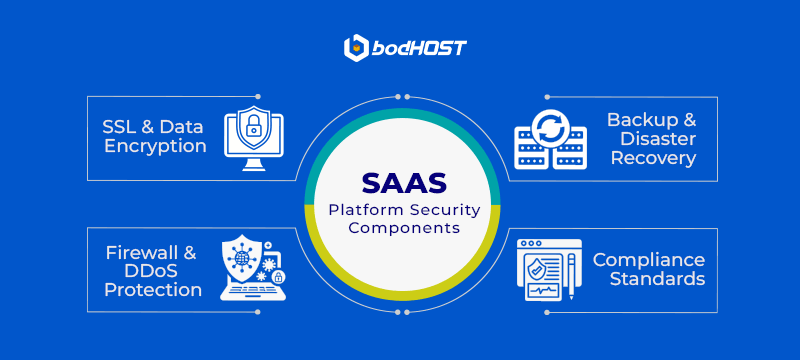
Support, security, scalability, and performance matter when choosing a hosting company for SaaS apps. High availability to reduce downtime, robust security features to safeguard user data, scalable infrastructure to accommodate growth, and prompt technical support are all hallmarks of a trustworthy supplier. A SaaS development company also needs to consider high availability to reduce downtime, robust security features to safeguard user data, scalable infrastructure to accommodate growth, and prompt technical support.
Consideration should also be given to uptime guarantees, backup plans, compliance assistance, and managed services that lessen operational burden and free up SaaS companies to concentrate on product development.
bodhost is a reliable choice for web hosting for SaaS platforms because it offers managed VPS solutions designed to support SaaS growth with dedicated resources, flexibility, and scalability. With a 99.9% uptime SLA, bodHOST ensures high availability and consistent performance, keeping SaaS applications accessible at all times. It also provides advanced security layers, including SSL support, firewalls, malware protection, and DDoS mitigation, to protect sensitive data and applications. In addition, 24×7 expert technical support ensures quick issue resolution and continuous assistance for smooth SaaS operations.
1. What is the best hosting for SaaS applications?
Cloud or managed VPS hosting is best for scalability and performance.
2. Is cloud hosting better for SaaS platforms?
Yes, cloud hosting offers flexibility, scalability, and high availability.
3. How much does SaaS hosting cost?
Costs vary depending on resources, traffic, and hosting type.
4. Can VPS hosting handle SaaS traffic?
Yes, VPS hosting is ideal for early to mid-stage SaaS products.
5. What security features are required for SaaS hosting?
SSL, firewalls, DDoS protection, backups, and compliance support.
6. When should I upgrade my SaaS hosting plan?
When traffic grows, performance declines, or compliance needs increase.
Web hosting for SaaS platforms is not just about server space, it’s about building a scalable, secure, and high-performance foundation for long-term success. Choosing a Managed Cloud Server Hosting solution from a reliable managed hosting provider ensures your SaaS application can grow confidently while delivering a consistent, secure, and dependable experience to users.
For more information, read the blog: VPS Hosting for SaaS Startups and Developers: Key Benefits

Explore more hosting insights, tips and industry updates.
Hosting your cheap cloud hosting platform on virtualization delivers better business stability and reduces operating…
Today a large number of businesses have started leveraging Cloud computing owing to a large…
In the digital infrastructure, server plays a vital role. It serves as the backbone for…