
How To Make Business Websites More Trustworthy
Your exceptional content, amazing presentation, and constant call to action will help you connect with…

 Paul Lopez
In 2025, the llms.txt standard will be a vital tool for website owners due to its creative approach to managing the interaction between AI systems and website content. As artificial intelligence systems like ChatGPT, Gemini, and Claude become more adept at crawling and analysing web content, controlling or managing content effectively is more important now than ever before. This new rule helps keep original content safe and high-quality by letting website owners control how AI bots can see, use, and handle their content.
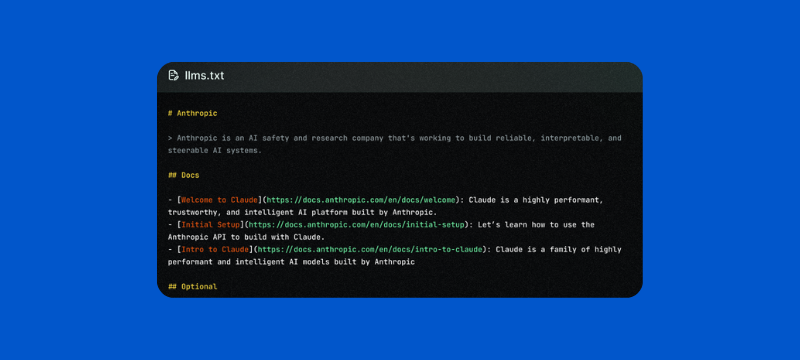
llms.txt is a simple text file that website owners put on their website’s root directory to give instructions to AI tools like ChatGPT or Gemini. It is like robots.txt (which talks to Google’s search crawlers), but this one is made just for AI systems.
The file tells AI tools three main things: what parts of your website they can read, what they can do with your content, and what rules they need to follow. It is written in basic text that’s easy for both humans and AI to understand.
More and more website owners are starting to use .llms.txt files, especially content creators and developers. However, the big AI companies are still working on adding full support for reading these files.
llms.txt offers numerous benefits for website owners. Let us explore one by one:
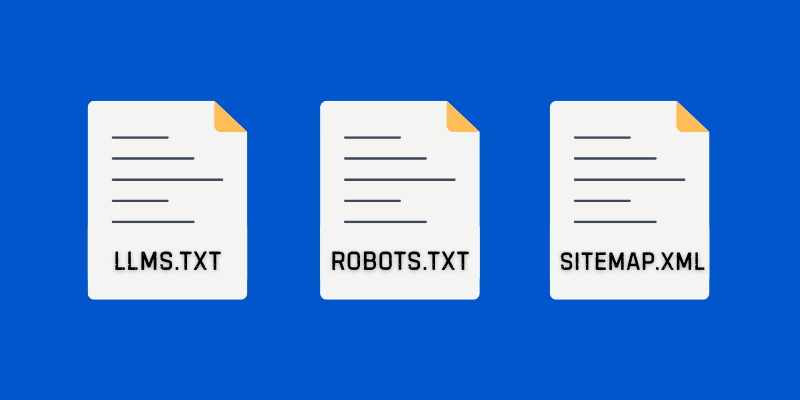
Although all three files serve to communicate with automated systems, they have distinct purposes and audiences. “robots.txt” is designed for traditional search engine crawlers and focuses on basic “allow/disallow” commands for SEO purposes. “sitemap.xml” helps search engines understand your site structure and find all important pages for indexing. “llms.txt,” however, is specifically crafted for AI systems and offers context-aware instructions for content processing and training purposes.
| Feature | robots.txt | sitemap.xml | llms.txt |
| Purpose | Control search crawler access | Guide search engine indexing | Manage AI content usage |
| Who reads it | Search engine crawlers | Search engines | AI systems and LLMs |
| Format | Simple text commands | XML structure | Markdown with metadata |
| Control level | Basic allow/disallow | Page discovery | Granular AI usage rules |
Key Elements to Include
The llms.txt file follows a structured format that AI systems can easily study and understand. Here are the essential components:
markdown
# My Website
> A comprehensive resource for web development tutorials and tools
## Content Guidelines
– Please respect our content licensing terms
– Contact us for commercial AI training usage
## Sections
### Documentation
– /docs/
– /tutorials/
– /guides/
### Restricted Content
– /private/
– /members-only/
– /premium/
llm-agent: *
Disallow: /private/
Disallow: /admin/
Disallow: /members-only/
Allow: /public-docs/
Allow: /tutorials/
# Contact for AI training partnerships
Contact: [email protected]
Policy: https://example.com/ai-usage-policy
# This content is available under a Creative Commons license
# Commercial AI training requires explicit permission
Follow the steps:
Search engine crawlers obey robots.txt guidelines and concentrate on SEO-relevant content as they carefully scan websites to index content for search results. They mainly assist consumers in finding relevant information through search queries and obey the ranking restrictions.
Web content is accessed by large language models for training, and they may retain knowledge to produce new content depending on patterns they have discovered. Content control is particularly important since, in contrast to search crawlers, LLMs are able to reproduce, change, and create new content using the information they have processed.
Large Language Models access web content for training purposes and may store information to generate new content based on patterns they have learned. Unlike search crawlers, LLMs don’t just index content; they can reproduce, transform, and generate new content using the information they have processed earlier, making content management more important.
The llms.txt standard is a noteworthy advancement in 2025, allowing website owners to define how AI systems interact with their content. As artificial intelligence continues to evolve and reshape digital experiences, having a clear and structured way to protect your online content is more important than ever.
At bodHOST, we believe in staying ahead of emerging technologies by supporting responsible AI practices. By implementing llms.txt, you not only protect your digital assets but also contribute to a more transparent and ethical AI ecosystem.
Learn more in our detailed article: AI-Powered Webpage Optimization: What It Is and How to Use It

Explore more hosting insights, tips and industry updates.
Your exceptional content, amazing presentation, and constant call to action will help you connect with…
Though cloud & virtualization are the buzzing words in the industry, however, still there are…
If you are a business owner, you must think about the growth of your business.…