An Insight On Web Application Cloud Hosting
Many web developers are considering the thought of moving their applications from being based on…


 Paul Lopez
Have you ever questioned what makes the best domain for an e-commerce store? Your domain isn’t just a web address; it’s the first impression clients get of your company, the main factor in SEO rankings, and a powerful tool for building trust and recognition. Therefore, selecting the right domain name can directly affect your product’s visibility, memorability, and sales.
In this blog post, we will explore how to select the perfect TLD (Top-Level Domain), decide between brandable and keyword-rich names, and avoid common pitfalls. You will also discover essential SEO considerations and handy tools to help you secure a domain that supports long-term e-commerce growth.
Let us first try to understand why a domain name matters for Ecommerce success. A domain name is an address that can be read by humans to access websites on the internet. It becomes the identity of the website being searched and affects how people notice your brand, how easily they find you, and how likely they are to return.
Your domain name is essential for branding, SEO, and gaining the trust of customers when starting an online store. distinct domain kinds have distinct functions, and picking the appropriate one can help you improve your internet presence and draw in the proper kind of visitors.
A Top-Level Domain (TLD) is the part of a web address that comes after the dot, such as ‘.com’ or ‘.store.’ It plays an important role in shaping your brand identity, building trust, and influencing how easily customers remember your website. For e-commerce businesses, selecting the right TLD can affect both credibility and search engine performance.
The most well-known and reliable TLD in the world is still ‘.com.’ When consumers are looking for a brand, they often type ‘.com’ by default, which makes it perfect for reputation and worldwide reach. Even if you also use other TLDs, it is strongly advised to secure the ‘.com’ version of your store’s name if it is accessible.
.store is made specifically for internet sales. It can boost click-through rates by immediately notifying visitors that they have arrived at a purchasing website. This TLD offers a unique, commerce-focused identification, making it particularly useful if the .com portion of your business name is already used.
With the help of these sector-specific TLDs, you may creatively brand your store. Fashion stores, for example, benefit greatly from .boutique, but multi-vendor systems are better suited for .market. These TLDs can help people remember your brand, but they work best when paired with successful advertising to make sure people remember the extension.
Using a country code TLD (ccTLD) may improve local SEO and build confidence with local clients if you sell mostly in that nation. For example, Indian consumers are drawn to ‘.in’, but UK viewers are drawn to ‘.uk.’ However, if you plan to grow worldwide in the future, ccTLDs can reduce your appeal.
No matter the TLD you choose, your E-commerce store’s success also depends on a domain that’s short, simple, and memorable; ideally, one to three words without numbers, special characters, or hyphens. Always check for trademarks to avoid legal issues, and use applicable keywords strategically to boost SEO without sacrificing brand appeal. Confirm the name is easy to spell and pronounce, and make sure that matching social media handles are available to maintain constant branding across platforms.
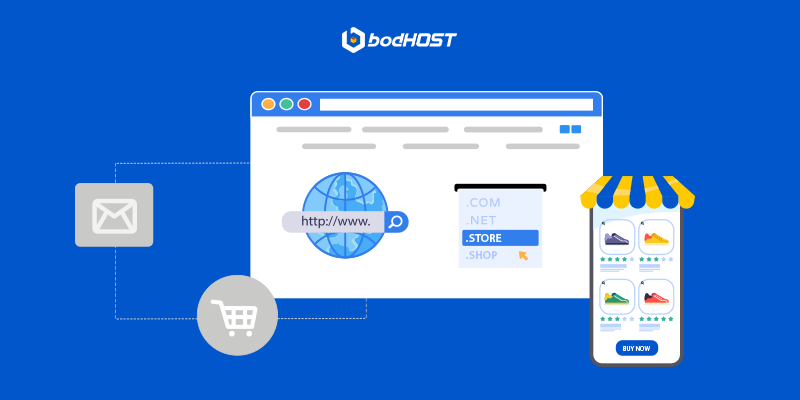
It takes creativity and focus to find the perfect e-commerce domain. Fortunately, several tools can simplify the process. Based on your keywords, niche, or brand idea, domain name generators such as NameMesh, LeanDomainSearch, and Shopify’s Business Name Generator can produce ideas, often resulting in unique combinations you might not have considered. Once you’ve narrowed your list of options, domain availability checkers like bodHOST can quickly confirm if your chosen names and TLDs are still available, while also suggesting close alternatives if they’re taken. Finally, to avoid costly disputes and potential rebranding later, it’s essential to use trademark and legal clearance tools such as the USPTO Trademark Search (US), EUIPO eSearch (EU), or your local trademark database to confirm your domain doesn’t violate on contemporary rights.
Choosing a domain name is exciting, but a few common mistakes can limit your store’s growth and harm your brand in the long run. Avoid these pitfalls to set your business up for lasting success:
From the above article, it is clear that your domain name and TLD are more than just an address; they’re the foundation of your e-commerce brand identity. By choosing a short, memorable, and legally safe name paired with the right extension, you can boost visibility, strengthen branding, and set your store up for long-term success. Take the time to brainstorm, conduct a thorough Domain Name Search, and validate your choice; it’s a decision you’ll live with for years.
Ready to secure the perfect domain for your store? Start by shortlisting ideas, checking availability, and making sure they match your brand vision. The sooner you buy a domain name in your desired TLD, the sooner you can build your online presence and start attracting customers.
Learn more in our detailed article: Important Considerations Before Domain Name Registration

Explore more hosting insights, tips and industry updates.
Many web developers are considering the thought of moving their applications from being based on…
If you are a business owner, you must think about the growth of your business.…
As businesses grow, their websites often receive more visitors, process more data, and support more…