
5 Underlying Benefits of Public Cloud for SMBs
For any small business owner, there are various concerns that they need to look after…


 Paul Lopez
Voice search optimization for ecommerce is becoming a crucial part of modern SEO strategies. More users today rely on voice assistants like Alexa, Google Assistant, and Siri to find products, compare prices, and make purchasing decisions online. Instead of typing short keywords, users now ask conversational questions such as “Which online store sells wireless earbuds with fast delivery?” or “Where can I buy affordable gaming keyboards online?”
For ecommerce businesses, this shift means adapting their SEO strategy to match natural language search queries. Optimizing product pages, improving website speed, and implementing structured data guidelines can help online stores appear in voice search results.
In this guide, we will explain how voice search works, why it matters for ecommerce in 2026, and the practical steps businesses can take to optimize their stores for voice driven shopping experiences.
Voice search optimization for ecommerce involves optimizing online store content and technical SEO so products appear in voice assistant search results. It focuses on conversational keywords, structured data, mobile performance, and fast website hosting to help search engines deliver accurate spoken answers to users.
Voice search works through advanced technologies such as speech recognition, artificial intelligence, and natural language processing. These systems analyze spoken queries and interpret user intent before returning relevant results.
When someone asks a question using a voice assistant, the search engine tries to provide a direct and accurate answer. This means ecommerce websites must structure their content clearly so search engines can easily extract information.
Voice commerce allows customers to search, compare, and purchase products using voice commands. Consumers now ask questions like:
As voice interactions increase, ecommerce businesses must ensure their content matches the conversational way people speak.
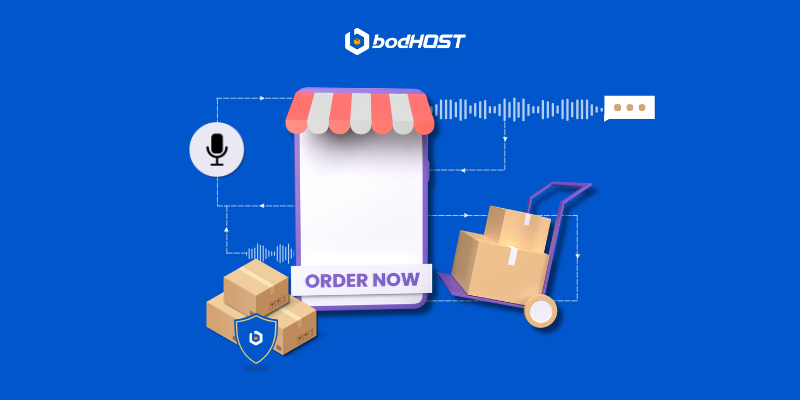
Voice search is important for ecommerce because consumers increasingly use voice assistants on smartphones and smart speakers to find products quickly. Stores optimized for voice queries can improve visibility, attract high intent to shoppers, and deliver faster shopping experiences that increase engagement and conversions.
Voice commerce continues to grow rapidly as smart devices become more common in households. Consumers now rely on voice assistants for everyday searches, including product discovery.
Industry reports suggest that voice-based shopping will continue expanding as AI assistants become more accurate and integrated into ecommerce platforms.
Audio searches are very different from traditional typed searches. Users typically speak in full sentences rather than short keywords.
For example:
Understanding this change helps ecommerce businesses optimize their content properly.
Most voice searches happen on mobile devices. Smartphones, smart speakers, and wearable technology are now primary tools for voice interactions.
This means ecommerce websites must be mobile friendly and fast loading to support voice search traffic.
Users often ask questions when speaking to voice assistants, which requires ecommerce websites to optimize natural language, quick answers, and structured data so search engines can deliver accurate spoken responses.
|
Factor |
Traditional Search | Voice Search |
|
Query length |
Short keywords |
Long conversational queries |
|
User intent |
Informational or transactional |
Highly intent focused |
| Query format |
Typed search |
Spoken questions |
| Results format |
List of links |
Direct answers and snippets |
Optimizing ecommerce websites for conversational queries can provide several business advantages.
Many spoken queries indicate strong buying intent. Users searching for a product through voice commands are often closer to making a purchase decision.
Voice interaction allows customers to search for products quickly and conveniently without typing long queries.
Well optimized ecommerce websites can appear in:
This increases brand exposure and attracts targeted traffic.
Businesses can improve their visibility in conversational search results by following a few practical SEO strategies.
Voice queries are typically longer and more natural. Ecommerce content should include phrases that reflect how customers speak.
Examples include:
Including these phrases in blog content, FAQs, and product descriptions helps search engines match spoken queries.
Many voice searches begin with questions such as “what,” “which,” or “where”. Adding FAQ sections to product pages and blog articles helps answer these queries clearly. This structure also improves the chances of appearing in featured snippets.
Product pages should contain clear and detailed information, including:
Structured and descriptive content helps search engines extract answers more easily.
Schema markup allows search engines to understand ecommerce content better.
Important schema types include:
Structured data improves search appearance and helps voice assistants deliver accurate responses.
Most conversational searches happen on smartphones. Therefore, ecommerce websites must be loaded quickly and displayed properly on mobile devices. Optimizing images, scripts, and page layout improves both user experience and search performance.
Website infrastructure plays a critical role in search performance. Fast and reliable hosting helps ensure that product pages load quickly and remain accessible during high traffic periods. Search engines prefer websites that deliver consistent performance. Faster page loading also improves customer experience and reduces bounce rates.
For ecommerce stores expecting growth in AI-driven traffic, scalable hosting solutions are essential.
Businesses that expect increasing traffic from AI driven search should invest in reliable infrastructure. bodHOST provides various hosting solutions designed to support online stores with fast performance and strong security. For growing businesses that require dedicated resources, managed VPS hosting solutions can also help handle higher traffic and complex ecommerce applications.
Fast server response times help websites load quickly and perform better in search results.
bodHOST supports platforms such as WooCommerce, and custom ecommerce applications.
Secure hosting protects customer data and helps maintain trust.
As ecommerce traffic grows, bodHOST hosting solutions can scale easily to support increasing demand.
Voice search is transforming how consumers interact with ecommerce websites. As more users rely on voice assistants to search for products, businesses must adapt their SEO strategies accordingly.
By focusing on natural language keywords, structured content, mobile performance, and reliable hosting infrastructure, ecommerce websites can improve visibility and attract high intent to shoppers.
Businesses that prepare for this shift today will be better positioned to benefit from the continued growth of voice driven search in the coming years.
Read More about our another article: Optimizing for Voice Search: Preparing Your Website for the Future

Explore more hosting insights, tips and industry updates.
For any small business owner, there are various concerns that they need to look after…
When any enterprise hosts on a cloud server, you will definitely need an email server…
In this constantly evolving field of web development and digital marketing, WordPress stands out as…