Zen Cart Warning Troubleshooting
ZenCart Warning: main(): failed to open stream: No such file or directory in <. ZenCart…

 admin
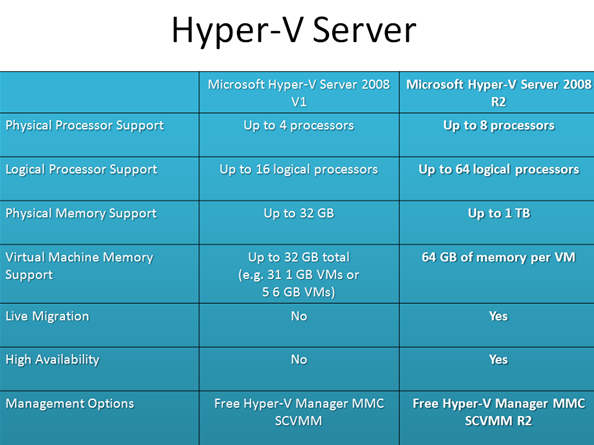
The new stand-alone hypervisor from Microsoft designed to further the efficiency of the virtualization technology. Today organizations require increasingly adaptive applications and technologies to streamline their IT operations and reduce costs.
The new Hyper V Server 2008 R2 has added features like live migration, an expanded processor and memory support for host systems.
There are several features of Microsoft Hyper-v 2008 R2 designed to improve its performance:
The new hypervisor has made it possible for IT admins to enhance their existing virtualized environment. It has tools for patching, provisioning, management, and support services. The learning curve is not very steep for those familiar with the previous versions of the hypervisor. Overall, this is the next-generation hypervisor designed for better performance and output for your virtualized environment.

Explore more hosting insights, tips and industry updates.
ZenCart Warning: main(): failed to open stream: No such file or directory in <. ZenCart…
If you cannot seem to connect to MySQL with a PHP script then it might…
Now, It is simple to select the PHP version that your website is utilizing using…